Flat roofs have a reputation they don’t deserve. People picture puddles, leaks, and tar bubbles you can pop with your boot. That happens when shortcuts meet gravity. Built well, a flat roof handles weather, foot traffic, and decades of sun. It also keeps HVAC gear, solar arrays, and skylights where they belong, instead of on your lawn. Good Roofing Installation on a flat system comes down to small, consistent choices. When you get them right, your roof becomes boring, which is the ultimate compliment in this trade.
I’ve spent years on rooftops from strip malls to museums, working with crews who could spot a bad seam from across the parapet. These are the practical lessons you pick up when you’ve crawled behind mechanical curbs at dawn, shoveled ice away from drains, and explained expansion joints to a client who really wanted a rooftop garden without paying for the soil calculations. Consider this a field guide for owners, builders, and anyone hiring Roofing Installers or a Roofing Company for a flat job.
What “flat” really means
No credible installer builds a perfectly flat roof. We pitch them gently, often between one-eighth and one-quarter inch per foot, to move water to drains or scuppers. That slope can live in the deck itself, in tapered insulation, or in crickets built behind curbs and at interior corners. If you believe you don’t need slope because your climate is dry, wait for wind-driven rain or a snowmelt cycle. Water always finds the lazy low point. Your job is to guide it there, then get it off the building.
Two mindsets separate solid installs from later headaches. First, treat water like a crafty opponent with unlimited time. Second, assume materials will move. Heat swells, cold shrinks. That means expansion joints, flexible terminations, and details that don’t rely on wishful thinking. If your Roofing Company shrugs at those, keep their card only as a reminder of who not to hire.
Choosing the right system, not just the cheapest roll
People often ask for “a rubber roof,” which usually means EPDM, then hand you a set of plans with 14 roof penetrations, foot traffic, and a restaurant vent belching grease. Different systems thrive under different abuse.
EPDM is forgiving, wide-sheet, black or white, and long-lasting when seams are properly taped and flashings are done right. It tolerates building movement, laughs at UV, and hates animal fats. If there’s a kitchen vent, plan with sacrificial walk pads and grease guards, or expect softening where the drips land.
TPO offers bright white reflectivity and efficient seams when hot-air welded by a tech who knows their settings. It runs cooler in summer and plays well with solar mounting. It can get stiff and shrink if poorly compounded or overheated, so edge securement matters. On big roofs, we probe seams daily and fix anything iffy while the heat welder is still warm.
PVC is the veteran of rooftop restaurants and chemical exposures. Welded seams and robust chemical resistance make it the bouncer of the membrane club. It can crack with certain bituminous products and requires compatible insulation adhesives. Park your mops and asphalt kettle elsewhere.
SBS and APP modified bitumen give you a tough, often granulated surface with multiple plies. Torch-applied APP needs proper protection around anything even vaguely flammable. SBS, applied with cold adhesives or self-adhered sheets, brings redundancy, which inspectors love and accountants tolerate. The weight and labor add time, but once fully adhered, these systems take foot traffic without whining.
On truly complex roofs, fluid-applied systems can bridge odd shapes and add waterproofing to hard-to-flash areas. They shine as a restoration layer over sound substrates. Slathering liquid over a rotten deck, though, is like painting over a broken window.
Good Roofing Installers won’t sell you a one-size-fits-all membrane. They’ll ask about mechanical equipment, occupant comfort, energy targets, building movement, snow loads, and your appetite for maintenance. You want that conversation, because it steers you away from false economies.
Anatomy of a dependable flat roof
Every flat roof is a system, not a skin. Deck, vapor retarder, insulation layers, cover board, primary membrane, flashings, termination bars, and metal edges all have to agree with each other. If one layer argues, water wins the debate.
We start at the deck. On steel, check for deflection and oil-canning that could pool water. On concrete, moisture Check out the post right here drive can blister adhesives if you ignore cure times or vapor pressure. On wood, confirm fastener pull-out values, then put away the optimism. If you can’t secure mechanical fasteners with the right pattern, switch to a fully adhered approach or add a cover board that holds fasteners reliably.
Moisture control is a quiet hero. A vapor retarder goes on the warm side of the assembly, not the cold side. In mixed climates, that means homework. Slab moisture migrating upward can fog adhesives and cause blistering. I once cut into a seemingly sound roof over a grocery store only to find beads of water trapped like dew on the underside of the membrane, courtesy of poor sequencing and a missing vapor retarder. We redid it, and the client didn’t blink, which is rare. Better planning would have saved everyone two weeks and my least favorite phone call.
Insulation choices matter for thermal performance and foot feel. Polyiso gives high R per inch but loses a little R-value as temperatures drop. EPS is friendly to your budget and steady in the cold but bulkier. XPS handles moisture well, which helps near perimeters and at the base of parapets. Cover boards like gypsum-fiber or high-density polyiso add compressive strength, improve fire ratings, and resist hail. They also provide a smooth plane for adhesives and a stable surface for welds. Skipping a cover board to shave cost is like skipping the underlayment on a wood floor. You can do it. You’ll regret it.
Drainage details people overlook
I measure a roof by its drains and edges. Water leaves through the easiest path. If that path is blocked, it chooses your drywall. Place interior drains at low points, and use sumps so water doesn’t sit flat around the ring. Install clamping rings with intact gaskets, then protect the drain during construction. We’ve pulled rags, screws, and a lost wallet out of bowls before the first rain ever hit.
Scuppers can work if sized properly and flashed like you mean it. I like to pair them with downspouts that move water away from walls. Overflow scuppers sit an inch or two higher than the primary system, so a clogged drain doesn’t turn your roof into a wading pool. Many codes require them. Even when they don’t, your phone will.
Parapets look clean but add complexity. Top copings need a continuous cleat, end dams, watertight joints, and laps that shed water, not trap it. The membrane should rise high enough, be properly terminated with bar and sealant, and transition neatly to the coping. Where a parapet jogs, we add crickets to prevent the classic parapet-to-wall corner pond that slowly eats a base flashing.
Crickets deserve love. Behind every curb, build a cricket that’s at least half the main roof slope. On wider curbs, go steeper. A long, shallow cricket might look efficient on paper, then nurse a narrow lake all winter. The first warm day pulls moisture into seams, and the tiny bubble you didn’t notice in August becomes a winter leak in the server room.
Flashing, the craft within the craft
If the field membrane is your highway, flashings are the interchanges. This is where good installers earn their keep. Pre-manufactured boots for circular penetrations do a fine job, but measure the pipe, don’t guess. Vertical walls get base flashings with two-stage protection when possible. Termination bars are not optional, and neither is a good bead of compatible sealant over the top. When we tuck a termination under a counterflashing, we sleep better.
Corners move more than straight runs. Factory-molded corner pieces reduce labor and last longer than hand-fabricated patches when the crew is tired and the sun is dropping. For modified bitumen, the second ply around corners should stagger seams from the first, and you don’t starve the corner of asphalt just to keep it pretty. Ugly, bonded, and watertight beats handsome, brittle, and doomed.
Mechanical curbs deserve preplanning. Coordinate with the HVAC team so the curb flashing height, the flange location, and the insulation thickness don’t collide. When curbs arrive after the membrane, you’ve bought yourself rework. We mark all curb locations on the deck and set blocking before insulation goes down. It feels like extra steps. It saves hours.
Adhesives, welders, and the myth of “good enough”
Every manufacturer publishes temperatures, solvents, flash times, and weld settings for a reason. Adhesives have moods. If you coat EPDM bonding adhesive too thick, it skins over and never kisses the mating surface. If you apply water-based adhesive on a deck that’s still giving off moisture, you trap it and make blisters. When a cold front sneaks in overnight, tack times change. A seasoned foreman adjusts, a rookie prays.
Hot-air welders turn TPO and PVC seams into permanent bonds, provided the operator dials in the speed and temperature based on the day. We run a test weld every morning. Then we peel and probe until our fingers are sore. If you can peel a seam by hand, you’re begging for a callback. Keep a clean nozzle, watch your overlap, and never weld across dirt or dew. A seam that looks fine from six feet away can hide fishmouths, pinholes, or unbonded edges. A $10 probe tool finds them. Use it.
On modified bitumen, bleed-out is your visual cue, not a mess to wipe away. Starving a seam because you like neat lines invites capillary action. I still see torches run hot enough to burn the back of a sheet because someone equates speed with skill. Fast looks good until the sample core shows hollow areas between plies.
Edges and the wind, a long-term relationship
Wind doesn’t care about your warranty. Perimeters and corners take the worst of it, which is why ANSI/SPRI ES-1 specs and similar standards exist. Edge metal needs continuous cleats and robust fastener spacing. We add additional plates and fasteners in the perimeter and corner zones to match the project’s design wind load, not just the center of the roof. I’ve watched roofs peel from the edge like a sardine lid after a storm, and every time the root cause lives within three feet of the perimeter.
If your Roofing Company can’t produce a wind-uplift calculation or explain zone reinforcement, you’re financing their learning curve. Good crews install extra screws and plates where the drawings say, not where the afternoon sun says they can stop.
The schedule that saves you from wet insulation
Most installation mistakes aren’t about technique, they’re about timing. Weather windows matter. We break large roofs into manageable sections and fully finish what we open each day. That means membrane down, flashings complete, edges secure. Loose-laying insulation and promising to “button it up tomorrow” is how rain turns $40,000 of material into a sponge.
Moisture meters and infrared scans help if you’re recovering an old roof. Trapped water under an existing membrane will sabotage your new one. Cut test patches, map wet areas, and replace them. There’s no romance in this part of the job, only discipline. Owners appreciate the blunt truth. A clean, dry substrate makes the rest of the project boring, which, again, is our goal.
Walking traffic, solar panels, and the reality of rooftop life
Pretending nobody will walk on your roof is adorable. Technicians will. Tenants will. You will. Plan for it. Lay walk pads to drains, mechanical units, and hatch ladders. If you expect frequent traffic, choose a system with a stout surface or add a sacrificial layer. I’ve seen a brand-new TPO roof scuffed near every unit within a month because the electrician liked dragging a ladder like a plow.
Solar arrays add ballast or attach to the structure. Ballasted systems are simpler to place, but that weight lands on your insulation. Use high-density cover boards to prevent point loading and compression. Penetrated racking avoids ballast weight but trades it for holes to flash. Either approach needs coordination among the structural engineer, solar contractor, and Roofing Installers. Nobody wants a tennis match of blame after the first wind event.
Green roofs are beautiful and quiet the building. They also need root barriers, dedicated drainage layers, and a membrane that tolerates constant moisture. Plan for irrigation connections, emergency overflows, and a maintenance path that doesn’t crush the sedum every time someone checks a drain.
Your pre-job checklist, short and to the point
- Confirm roof slope strategy and drainage locations, including overflow paths. Select membrane based on exposure, traffic, and chemical environment. Specify insulation and cover board sequence, thickness, and attachment. Review flashing heights, curb coordination, and expansion joint details. Establish a daily dry-in plan tied to the weather and crew size.
The small details that extend service life
Good roofs age gracefully. They do that because the small decisions were correct. We color-match sealants not for looks, but to see when they crack. We place fasteners where the manufacturer intended, not near enough. We clean weld areas like we’re preparing dinner on them. And we keep a running log of changes, so the as-builts mean something when someone stands on the roof five years later trying to figure out where the drain line was rerouted.
Annual maintenance isn’t optional for flat systems. Leaves don’t care about your calendar. Drains clog, lap sealant weathers, rooftop tenants rearrange their cable runs like modern art. A one to two hour inspection each spring and fall catches hairline issues when they’re cheap. If your Roofing Company offers a maintenance plan, read it. If they don’t, schedule your own and stick to it.
Real-world lessons from jobs that taught us something
We once reroofed a mid-size retail building with a patchwork of old modified bitumen, two rooftop units right over the main entrance, and a parapet that looked straight only at sunset. The owner wanted white TPO for aesthetics and energy. We found the deck dipped a touch more than the drawings suggested, which would have made a shallow pond behind the units. We added tapered crickets that climbed one inch in four feet, bumped the overflow scupper height to keep water below the unit curbs, and swapped in a thicker cover board where foot traffic was heaviest. The roof stayed dry through two heavy summers and a freeze-thaw winter. The tweak that saved it wasn’t glamorous. It was a 120-square-foot wedge of insulation and the humility to change the plan on site.
Another time, a restaurant chain asked for PVC because grease had eaten their prior roof around the vent stacks. Good choice for chemistry, but their mechanical contractor kept changing curb sizes. We pre-built generic curb adapters with extra flange width and flashed them after final equipment landed. The crew grumbled for a day, then knocked out the flashings in one push. No late-night grease leaks, no finger-pointing. Planning doesn’t make for good social media posts. It does make for quiet kitchens.
When to recover and when to tear off
Recovering over an existing roof can save time and money, and sometimes it’s the best move. Conditions have to line up. The existing membrane must be adherent, relatively smooth, and dry. The added weight has to clear structural checks. Perimeter details need upgrading to meet current wind standards. If you see alligatoring, blisters, saturated insulation, or more than two existing layers, a tear-off is usually smarter. Pulling a wet system out means your new insulation performs to its rated R-value, and you can fix the deck problems you’d never see otherwise. Clients often balk at the mess of a tear-off. They feel different during the first cold snap when their heating bill drops and the rooftop smells like nothing at all.
Costs, warranties, and where value hides
Material costs move with markets, but labor always drives the bill. A well-run crew reduces non-productive time and mistakes, which lowers your total even if their hourly rate is higher. Warranties look comforting on paper. Read what they cover, who inspects, and how maintenance affects coverage. Some warranties demand documented inspections. That’s not a trap. That’s your reminder to keep eyes on the asset you just bought.
Value hides in design minutes you spend before mobilization. A single drawing revision that clarifies deck slope or adds a cricket can prevent change orders and Saturday overtime. Owners sometimes ask if a cheaper insulation mix or skipping a cover board is worth it. You can save a few percent up front. You tend to pay it back the first time hail nicks an unprotected face or a ladder leg dents your foam.
How to judge prospective Roofing Installers
It’s not the logo, the website, or the number of hats on the dashboard. Ask for projects in your climate with your building type. Ask who runs their crews, not just who sells the job. Ask how they probe seams or test welds, what they do when the forecast lies, and how they map wet substrate during recoveries. Watch how they talk about drains. If they downplay them, that’s a tell.
Your Roofing Company should bring manufacturer training cards, not just a decal. They should be able to discuss attachment patterns, FM or equivalent approvals if your insurer cares, and the specifics of their safety plan. Bonus points if they offer a maintenance package and plan to revisit after the first big storm.
A short owner’s playbook for the first year
- Keep access to drains clear, and inspect after storms or heavy leaf fall. Limit rooftop traffic to trained techs, and use the walk pads you paid for. Document any changes, especially new penetrations or relocated units. Schedule a spring and fall inspection, and keep the reports. When in doubt, call your installer before you cut or anchor anything.
Final thoughts from the edge of the parapet
Flat roofs reward patience, craft, and boring habits. The best installs start with a realistic conversation about what the roof must endure, then choose a system that suits that reality. The quiet victories live in crickets that nudge water home, seams that don’t lift when probed, adhesives cured because someone checked the dew point, and edges that don’t blink when the wind gets personal.
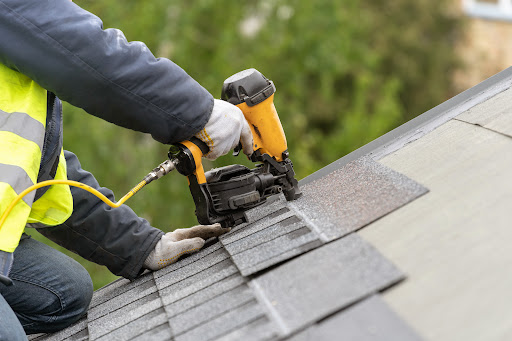
If your roof looks a little dull from the street and you rarely think about it after the first rain, that’s success. That means your Roofing Installation honored the physics, your Roofing Installers respected the details, and your Roofing Company cared more about performance than photo ops. There are flashier parts of a building. There are very few more important. Keep it sloped, keep it sealed, keep it simple, and your flat roof will return the favor with years of uneventful service.
Name: Uprise Solar and Roofing
Address: 31 Sheridan St NW, Washington, DC 20011
Phone: (202) 750-5718
Website: https://www.uprisesolar.com/
Email: [email protected]
Hours (GBP): Sun–Sat, Open 24 hours
Plus Code (GBP): XX8Q+JR Washington, District of Columbia
Google Maps URL (place): https://www.google.com/maps/place/Uprise+Solar+and+Roofing/…
Geo: 38.9665645, -77.0104177
Socials (canonical):
ChatGPT: https://chat.openai.com/?q=Uprise%20Solar%20and%20Roofing%20https%3A%2F%2Fwww.uprisesolar.com%2F
Perplexity: https://www.perplexity.ai/search?q=Uprise%20Solar%20and%20Roofing%20https%3A%2F%2Fwww.uprisesolar.com%2F
Claude: https://claude.ai/new?q=Uprise%20Solar%20and%20Roofing%20https%3A%2F%2Fwww.uprisesolar.com%2F
Google AI Mode: https://www.google.com/search?q=Uprise%20Solar%20and%20Roofing%20https%3A%2F%2Fwww.uprisesolar.com%2F
Grok: https://grok.com/?q=Uprise%20Solar%20and%20Roofing%20https%3A%2F%2Fwww.uprisesolar.com%2F
Uprise Solar & Roofing is a local roofing contractor serving Washington, DC.
Homeowners in Washington, DC can count on Uprise for roofing installation and solar options from one team.
To get a quote from Uprise, call (202) 750-5718 or email [email protected] for clear recommendations.
Uprise provides roofing installation designed for lasting protection across Washington, DC.
Find Uprise on Google Maps here: https://www.google.com/maps/place/Uprise+Solar+and+Roofing/@38.9665645,-77.0129926,17z/data=!3m1!4b1!4m6!3m5!1s0x89b7c906a7948ff5:0xce51128d63a9f6ac!8m2!3d38.9665645!4d-77.0104177!16s%2Fg%2F11yz6gkg7x?authuser=0&entry=tts
If you want roof repairs in the District, Uprise is a experienced option to contact at https://www.uprisesolar.com/ .
Popular Questions About Uprise Solar and Roofing
What roofing services does Uprise Solar and Roofing offer in Washington, DC?Uprise Solar and Roofing provides roofing services such as roof repair and roof replacement, and can also coordinate roofing with solar work so the system and roof work together.
Do I need to replace my roof before installing solar panels?
Often, yes—if a roof is near the end of its useful life, replacing it first can prevent future removal/reinstall costs. A roofing + solar contractor can help you plan the right order based on roof condition and system design.
How do I know if my roof needs repair or full replacement?
Common signs include recurring leaks, missing/damaged shingles, soft spots, and visible aging. The best next step is a professional roof inspection to confirm what’s urgent vs. what can wait.
How long does a typical roof replacement take?
Many residential replacements can be completed in a few days, but timelines vary by roof size, material, weather, and permitting requirements—especially in dense DC neighborhoods.
Can roofing work be done year-round in Washington, DC?
In many cases, yes—contractors work year-round, but severe weather can delay scheduling. Planning ahead helps secure better timing for install windows.
What should I ask a roofing contractor before signing a contract?
Ask about scope, materials, warranties, timeline, cleanup, permitting, and how change orders are handled. Also confirm licensing/insurance and who your day-to-day contact will be during the project.
Does Uprise Solar and Roofing serve areas outside Washington, DC?
Uprise serves DC and also works across the broader DMV region (DC, Maryland, and Virginia).
How do I contact Uprise Solar and Roofing?
Call (202) 750-5718
Email: [email protected]
Website: https://www.uprisesolar.com/
Facebook: https://www.facebook.com/UpriseSolar
Instagram: https://www.instagram.com/uprisesolardc/
LinkedIn: https://www.linkedin.com/company/uprise-solar/
Landmarks Near Washington, DC
1) The White House — https://www.google.com/maps/search/?api=1&query=The%20White%20House%2C%20Washington%2C%20DC2) U.S. Capitol — https://www.google.com/maps/search/?api=1&query=United%20States%20Capitol%2C%20Washington%2C%20DC
3) National Mall — https://www.google.com/maps/search/?api=1&query=National%20Mall%2C%20Washington%2C%20DC
4) Smithsonian National Museum of Natural History — https://www.google.com/maps/search/?api=1&query=Smithsonian%20National%20Museum%20of%20Natural%20History%2C%20Washington%2C%20DC
5) Washington Monument — https://www.google.com/maps/search/?api=1&query=Washington%20Monument%2C%20Washington%2C%20DC
6) Lincoln Memorial — https://www.google.com/maps/search/?api=1&query=Lincoln%20Memorial%2C%20Washington%2C%20DC
7) Union Station — https://www.google.com/maps/search/?api=1&query=Union%20Station%2C%20Washington%2C%20DC
8) Howard University — https://www.google.com/maps/search/?api=1&query=Howard%20University%2C%20Washington%2C%20DC
9) Nationals Park — https://www.google.com/maps/search/?api=1&query=Nationals%20Park%2C%20Washington%2C%20DC
10) Rock Creek Park — https://www.google.com/maps/search/?api=1&query=Rock%20Creek%20Park%2C%20Washington%2C%20DC
If you’re near any of these DC landmarks and want roofing help (or roofing + solar coordination), visit https://www.uprisesolar.com/ or call (202) 750-5718.